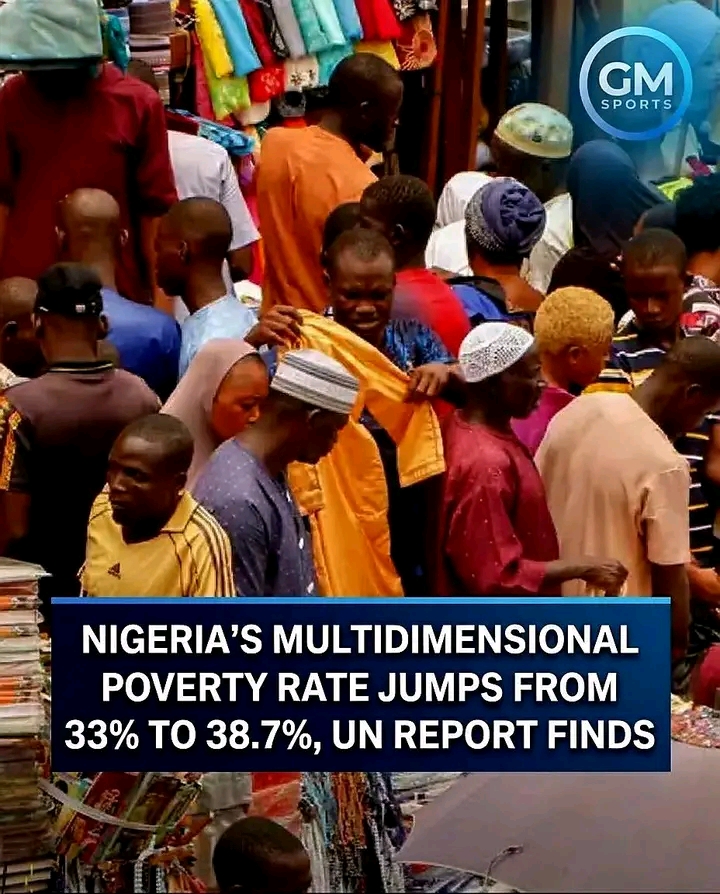
Nigeria has recorded the sharpest increase in multidimensional poverty among countries highlighted in the 2026 Global Multidimensional Poverty Index, published by the United Nations Development Programme (UNDP) and the Oxford Poverty and Human Development Initiative (OPHI).

The report indicates that Nigeria’s multidimensional poverty rate rose from 33% in 2021 to 38.7% in 2024, reversing earlier progress in reducing deprivation.
Multidimensional poverty measures more than income, examining overlapping disadvantages in health, education and living standards, including nutrition, school attendance, housing, sanitation, electricity and access to clean water. The report also identifies increases in multidimensional poverty in Afghanistan, the Central African Republic, Kyrgyzstan and Guinea.
Meanwhile, Egypt, Nepal, Tajikistan, Angola and Zambia recorded reductions in the proportion of people living in multidimensional poverty. However, population growth outpaced the rate of poverty reduction in Angola and Zambia, meaning the total number of people experiencing poverty still increased. Globally, the 2026 report estimates that 1.2 billion people across 108 countries live in acute multidimensional poverty, including 617 million children.
According to the 2026 Global Multidimensional Poverty Index published by UNDP and OPHI on 12 October 2026.