|| By Engr. Ademola Aaré
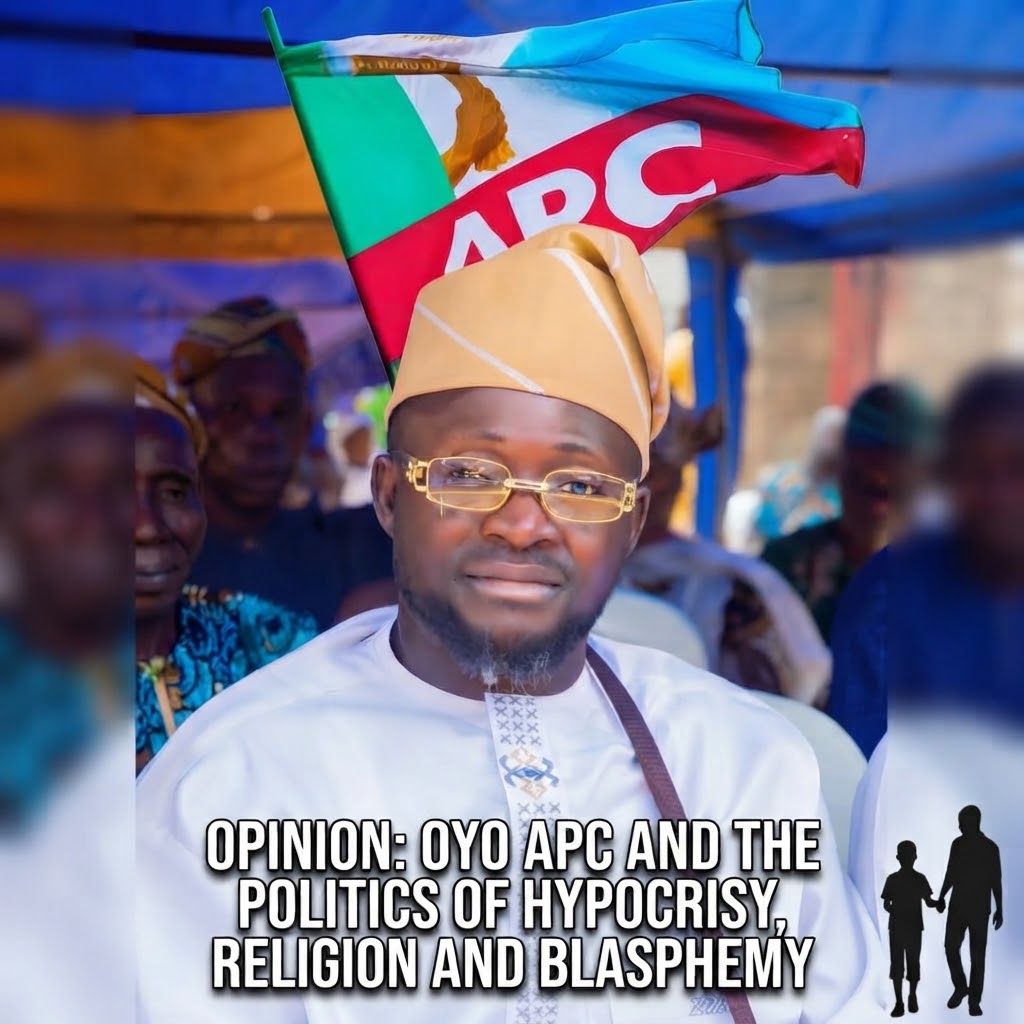
We must draw a line. For too long, our public life has been held hostage by two dangerous tools: political hypocrisy and the manipulation of religion. In Oyo State, as political activities gather momentum, it is important that citizens begin to pay closer attention to the manner in which religion, morality and public emotions are sometimes brought into political contests.
The politics of hypocrisy is not difficult to recognise. It is the politics in which politicians present themselves as champions of morality and religion, yet struggle to provide convincing answers to questions of governance, accountability and service to the people. It is a politics where religious language becomes louder than discussions about education, healthcare, infrastructure, security, employment and economic opportunities. A politician may speak passionately about faith, but the real test of leadership remains what that individual does with public trust and responsibility.
STATE POLICE: Abiodun Reveals the Huge Number of Personnel Nigeria Needs
Religion should command respect, not become a costume for political convenience. Genuine faith should inspire honesty, compassion, justice and responsibility. It should not be reduced to political slogans or deployed merely because an election is approaching. When politicians constantly appeal to religious sentiments while avoiding serious questions about their records, the public has every right to demand greater accountability.
One particularly dangerous dimension of this politics is the manner in which accusations of blasphemy can enter political disagreements. Blasphemy is a serious religious matter, and the religious sensitivities of every citizen deserve respect. However, an accusation should remain an accusation until it is properly established. Nobody should be condemned, attacked or subjected to mob action merely because someone has labelled a statement blasphemous.
In a constitutional democracy, disputes—however sensitive—must be handled through lawful institutions and due process. Religious emotions must not be turned into an instrument for silencing criticism, intimidating opponents or destroying reputations. Where an individual believes that a statement is offensive to their faith, there are lawful and peaceful ways to respond. Violence, threats and mob justice cannot be allowed to replace the rule of law.
The danger becomes even greater when political actors or their supporters exploit religious sentiments to divert public attention from issues that directly affect the lives of ordinary people. While citizens are encouraged to fight over who insulted which religion or who allegedly made an offensive statement, questions about roads, schools, hospitals, electricity, water, insecurity, unemployment and the management of public resources can quietly disappear from the conversation.
That is why the people of Oyo State must be careful. Political discourse should not be reduced to religious accusations and emotional slogans. The electorate deserves to know what every political party and candidate intends to do differently. They deserve to ask how policies will be funded, how jobs will be created, how insecurity will be addressed and how public institutions will be strengthened. These are the issues that determine whether government works for the people.
This is not an argument against religion. On the contrary, it is an argument for protecting religion from political exploitation. Christianity, Islam and other faith traditions should not become weapons in the hands of politicians. Religious belief belongs to the conscience of the individual, while governance belongs to the responsibility of elected leaders and public institutions.
The APC in Oyo State, like every other political party seeking the confidence of the people, should be prepared to engage citizens on policies, programmes, records and ideas. Its supporters should equally be encouraged to defend their political positions through facts and arguments rather than through personal attacks, religious provocation or accusations that could inflame public sentiment.
But this standard should not apply to the APC alone. Every political party, candidate and political movement must be held to the same standard. Democracy becomes healthier when citizens judge political actors by what they say, what they have done, what they propose to do and how they conduct themselves in public life.
The ordinary citizen also has a responsibility. We must refuse to become political weapons. We must learn to question claims before accepting them, demand evidence before believing accusations and resist attempts to manipulate our religious emotions for political purposes. A critic is not automatically an enemy of religion, and political disagreement should never be treated as a justification for violence.
ALSO READ:
Ademola Aaré Congratulates Hon. Ibrahim Oladebo (SIMPLE) on Emergence as APM Chairmanship Candidate
Oyo State deserves a political culture where leaders can defend their records without hiding behind religious sentiments. It deserves a political conversation centred on ideas, development, accountability and service. The people should be asking politicians what they will build, how they will govern and what measurable difference they intend to make in the lives of citizens.

Politics should not be about who can shout the loudest about religion. It should be about who can present credible solutions to the problems confronting the people. It should not be about manufacturing enemies through accusations; it should be about building trust through transparency and responsible leadership.
If we truly respect our religions, then we must refuse to allow them to become instruments of political manipulation. If we truly respect democracy, then we must protect the right to disagree peacefully. And if we truly want a better Oyo State, then our political conversation must rise above hypocrisy, religious provocation and personal attacks.
The people are watching. They are listening. And beyond the religious slogans, political accusations and campaign rhetoric, they have one fundamental question for every politician: What will you actually do for the people?
That is the question that should define the politics of Oyo State.
— Engr. Ademola Aaré, APM Publicity Secretary for Egbeda Local Government writes