— Oyo Governor Demands More Than GDP Growth, Revenue Figures as He Assesses Nigeria’s Economy

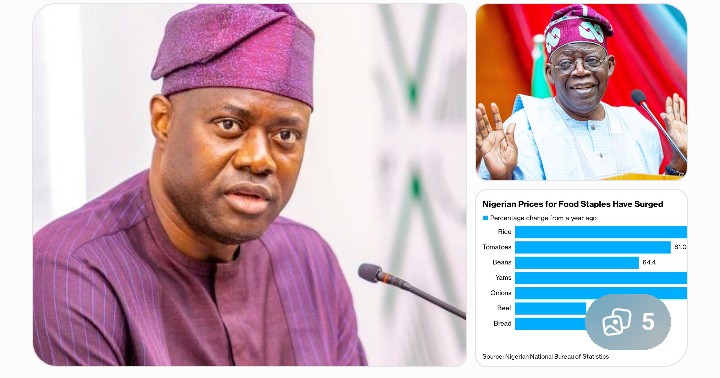
Egalitarian Voice has sighted a fresh newsletter released on Friday, August 7, 2026, by Oyo State Governor, Engr. Seyi Makinde, in which he questioned whether the economic gains being reported under the administration of President Bola Tinubu are translating into tangible improvements in the lives of ordinary Nigerians.
In the newsletter titled “When the Numbers Look Good, Are People Feeling Better?”, Makinde acknowledged the positive economic indicators being reported by the National Bureau of Statistics (NBS), including GDP growth, rising government revenues and budget implementation, but argued that such figures should not be the sole measure of economic progress.
According to the governor, the more important question is whether Nigerians are actually experiencing an improvement in their standard of living amid the economic reforms and policies being implemented by the Federal Government.
Makinde wrote: “These numbers matter. But there is a more important question: are the national numbers translating into better outcomes for Nigerians?”
Where Are Nigeria’s Borrowed Billions? Presidency Gives Fresh Explanation
TRENDING VIDEO: Mother Surprises Son With Live Goat at Graduation, Sparks Reactions Online
He also challenged policymakers to learn from places where measurable economic progress is translating into tangible benefits for citizens, stressing that economic growth should ultimately be reflected in improved livelihoods, infrastructure, public services and opportunities.
The Oyo governor said his administration’s philosophy of moving the state “from poverty to prosperity” is based on the belief that economic growth must have a direct impact on the people.
He explained that growth should create more opportunities for individuals to earn decent incomes, enable businesses to expand and employ more workers, improve infrastructure and public services, and give families greater confidence about their economic future.
Makinde acknowledged that Nigeria’s economy is recording growth, noting that the latest NBS figures showed real GDP growth in the first quarter of 2026, with significant contributions from the non-oil sector.
While describing the development as positive, the governor said Nigerians do not experience economic growth through percentages and statistical reports.
“But Nigerians do not experience GDP percentages. They experience the economy through the cost of food, transportation, electricity and housing,” he stated.
According to him, citizens also judge the economy by whether their businesses are expanding, whether employment opportunities are increasing and whether young Nigerians can secure decent jobs.
Makinde vs Tinubu: Wike’s Insider Reveals Reason Behind Oyo Governor’s Withdrawal
His comments amount to a broader test of the economic reforms of the Tinubu administration: beyond improved macroeconomic indicators, the real question, according to Makinde, is whether ordinary Nigerians can actually feel the benefits of the reported growth.
Turning to Oyo State, the governor highlighted the state’s own financial performance as an example of why revenue figures should be assessed alongside their impact on citizens.
Makinde disclosed that Oyo State recorded ₦406.9 billion in total revenue during the first six months of 2026, representing 91.2 per cent of its target for the period.
The state also recorded ₦345.7 billion in expenditure, representing 77.5 per cent of its half-year expenditure target, according to figures presented by the Secretary to the State Government, Prof. Musibau Babatunde.
However, Makinde stressed that the figures themselves should not be regarded as the achievement.
“Those figures are important to us, but they are not the achievement,” he said, insisting that the real value of government revenue lies in what the resources are used to accomplish.
He listed infrastructure development, education, healthcare and agricultural transportation among areas where government spending should make a meaningful difference.
Where Are Nigeria’s Borrowed Billions? Presidency Gives Fresh Explanation
The governor particularly cited Oyo State’s plan to take delivery of 50 electric buses, which he said would operate across local governments as well as on intra-city and inter-city routes.
According to Makinde, the objective of the buses goes beyond expanding the state’s transport fleet, as the initiative is designed to help reduce transportation costs for residents.
TRENDING VIDEO: Mother Surprises Son With Live Goat at Graduation, Sparks Reactions Online
“The purpose is not simply to add buses to a government fleet. It is to reduce transportation costs for our people,” he explained.
Makinde therefore urged Nigerians and policymakers to look beyond headline economic statistics when assessing the performance of the economy.
He maintained that positive national indicators should be welcomed, but argued that the ultimate test of economic policy is whether improved figures translate into lower burdens, greater opportunities and better living conditions for citizens.

“Good economic numbers should give governments greater capacity to improve people’s lives,” the governor stated.
He concluded with a question that captures the central argument of his newsletter:
“So, as we look at Nigeria’s economic indicators, we should certainly ask whether the economy is growing. But we should ask one more question. Can Nigerians feel the growth?”
For Makinde, that question remains the more important measure of whether Nigeria’s economic progress is truly reaching the people.

Egalitarian Voice reports that the governor’s intervention comes amid continued national debate over the impact of the Tinubu administration’s economic reforms, particularly the relationship between improving macroeconomic indicators and the everyday economic realities confronting households and businesses.