Egalitarian Voice Media has received Governor Seyi Makinde’s Newsletter dated November 12, 2026.
Below is the ful Newsletter as received, without any alteration:
I supported President Bola Ahmed Tinubu in 2023. Today, I am running against him in the 2027 presidential election.
Some people have asked what changed. Others believe there must have been a personal disagreement between us.
I understand why they would think that. But my decision is not about a personal disagreement or an ambition to occupy Aso Rock.
It is about the future of Nigeria and the opportunities available to Nigerians.
I supported President Tinubu because I believed he could bring people together to build a government of national unity and competence. I believed his administration would confront our economic challenges while creating opportunities for Nigerians to build better lives.
Three years later, I no longer believe his administration is taking us in that direction.
To explain why this matters so much to me, I need to tell you a little about myself.
The Nigeria That Gave Me a Chance
My name is Seyi Makinde.
I grew up in a lower-middle-class family. My father was a teacher who later retrained to become an accountant. My mother was a civil servant who worked as a telephone operator.
We were not wealthy. But we lived in a Nigeria where an ordinary family could reasonably believe that education, hard work and determination would give their children a better life.
I attended Bishop Phillips Academy in Ibadan and later studied Electrical Engineering at the University of Lagos.
My education gave me the foundation to build a career in engineering. I specialised in industrial measurement and safety systems, and at 29, I established Makon Engineering and Technical Services.
I started small and built a business that eventually grew beyond Nigeria.
I did not achieve this because I came from a wealthy or politically connected family. I had an education, acquired useful skills, found opportunities and worked to make the most of them.
Nigeria gave me the opportunity to live my dreams.
And that is what troubles me about the Nigeria we have today.
How many young Nigerians can confidently expect the same opportunities?
How many can complete their education, acquire useful skills, find meaningful work or start a business with a reasonable expectation that it will succeed?
How many parents can confidently tell their children that if they work hard and do the right things, they will have a better life?
I am not suggesting that the Nigeria of my youth was perfect. It had its problems.
But it gave people like me a chance.
And I believe every Nigerian deserves that chance.
Why I Entered Politics
For years, I tried to help people through philanthropy. I supported education, assisted individuals and families, and contributed what I could to my community.
But I eventually realised there was a limit to what I could accomplish by giving away part of my wealth.
I could help someone pay school fees or start a business. But what about the millions of Nigerians who needed those same opportunities?
Over time, it became clearer to me that if I wanted to make a greater difference, I needed to help create the conditions that would allow people to build better lives for themselves.
That was what led me into politics.
Between 2007 and 2015, I tried repeatedly to win public office. I sought a seat in the Senate twice and failed. I contested for Governor and failed.
I did not give up.
In 2019, the people of Oyo State elected me as their Governor.
I entered office without a political godfather. I have often said that I had no godfather, only God the Father.
Suddenly, the things I had spent years discussing were no longer theories. I had the responsibility to put them into practice.
Seven years later, I am proud of what we have accomplished in Oyo State. We have demonstrated that a government can make a real difference when it focuses on creating opportunities, building institutions and following through on decisions.
I have also learnt that governing is very different from running a successful business. I have made mistakes, acknowledged them and apologised when necessary. But those experiences have only strengthened my belief that Nigeria can work for Nigerians.
Why I Cannot Wait
When I declared my intention to run for President on 14 May 2026, some people asked why I was in such a hurry.
They said I could wait until 2031 or even 2035.
But I look at the Nigeria we have today, and I wonder what opportunities will remain for our children if we continue on this trajectory for another four years.
I look at young people who have worked hard, obtained qualifications and acquired skills but cannot find meaningful employment.
I see businesses struggling with electricity costs, transportation expenses and an economic environment that makes it difficult to grow.
I see parents who have done everything they can for their children but are no longer confident those children will have better lives.
And I see Nigerians who have become so disappointed in government that they no longer believe their votes can make a difference.
I understand that disappointment.
We have heard promises before. We have seen governments come and go. We have been told repeatedly that things will get better.
Yet too many Nigerians are still struggling to survive.
But I refuse to believe that this is all Nigeria can become.
I know what this country made possible for me. And I believe we can build a Nigeria where those opportunities are available to millions more people.
But governing Oyo State has also taught me something else. No matter how well a state is governed, its progress can be undermined by poor decisions taken at the federal level. I have seen this happen.
I am concerned that if we get the next four years wrong, the damage to our economy, our institutions and the prospects of another generation could become much harder to reverse.
That is why I cannot wait.
And it is why I believe we must change direction in 2027.
Why I Lost Confidence in President Tinubu
I supported President Tinubu in 2023 because I believed his experience and political relationships could help him bring Nigerians together.
One thing I have always acknowledged about him is his ability to build bridges across political divides. I believed he could use that ability to establish a government of national unity and competence, focused on improving the lives of Nigerians.
But over the past three years, I have become increasingly concerned about four things.
First, economic stability without economic development.
I acknowledge the improvements in some macroeconomic indicators under this administration. But government revenues and external reserves mean little to ordinary Nigerians if those gains do not translate into productive businesses, jobs, better incomes and improved living conditions.
Also, contrary to the formula President Tinubu claims to be following, economic stabilisation and development are not necessarily sequential. Nigerians did not have to endure this level of hardship while waiting for development to begin.
Second, governing by excuses.
Every government inherits problems, but it is elected to solve them. Over three years into this administration, we are still hearing explanations about inherited poverty, insecurity, electricity problems and other challenges, when Nigerians should be seeing more measurable progress towards resolving them.
Third, building political power instead of national unity.
I believed President Tinubu’s ability to build political alliances would translate into a government that brought capable Nigerians together around a shared national interest. Instead, I have come to believe that his political alliances serve his political objectives more than the national interest, and I am deeply concerned about the weakening of opposition parties, which are essential to a functioning democracy.
Fourth, economic reforms without adequate protection for Nigerians.
I supported the need to reform our petrol subsidy and foreign-exchange systems, but I expected those reforms to be implemented with adequate preparation for their consequences. Instead, millions of Nigerians who were already struggling were exposed to further hardship before sufficient measures were in place to protect them.
These are not simply political disagreements.
They reflect a fundamental difference in how I believe government should work and whose interests should come first.
Perhaps the best way to explain why these differences matter so much to me is to show you how I would have approached one of the most consequential decisions of this administration.
What I Would Have Done Differently
Let me use petrol subsidy removal as an example.
I would have used the presidential transition period to prepare for subsidy removal.
After all, President Tinubu cannot honestly say he did not know what the consequences would be. Back in 2012, when President Goodluck Jonathan attempted to remove petrol subsidy, he publicly opposed the abrupt removal, arguing against the hardship it would impose on Nigerians.
Nor can he claim he did not understand the hardship Nigerians were already experiencing. He witnessed the petrol and naira scarcity crises leading up to the 2023 elections and spoke publicly about their effects on Nigerians.
With this background, upon assuming office, I would have convened the National Economic Council to agree on a coordinated response with state governors.
We could have identified the interventions required to protect Nigerians, agreed on how they would be funded and established how the Federal Government, states and local governments would work together to deliver them.
And Nigerians would have been able to see how much was being spent, who was benefiting and what results were being achieved.
Even as a subnational government, we demonstrated in Oyo State that it was possible to act quickly to protect people.
When subsidy removal was announced, we immediately began consultations with organised labour and introduced measures to reduce the burden of transportation costs.
Within eleven days, we had announced the deployment of additional Omituntun buses, maintained existing fares and introduced half-price travel for students and senior citizens.
We did not wait until we had a comprehensive programme before taking action.
By August 2023, we had introduced the Sustainable Actions for Economic Recovery (SAfER) programme, which provided food relief to 200,000 vulnerable households, subsidised public transport and supported small businesses and farmers with loans and agricultural inputs.
Our approach was simple: provide immediate relief while developing measures to help people earn a living.
Good leadership requires more than making economically sound decisions. It requires understanding how those decisions will affect the people you have been elected to serve.
Nigerians deserved better preparation and better protection.
And that is the difference in our approach to governance.
Give Nigeria Another Chance
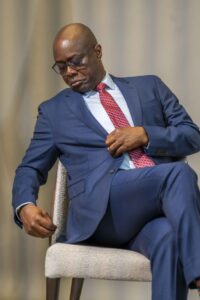
Seyi Makinde knotting his tie reflecting on his running for president
I know that many Nigerians have lost confidence in government.
Some have stopped believing politicians. Others have stopped believing elections can make a difference.
I understand why.
But I am asking you not to give up on Nigeria.
I am asking you to remember that this country has produced generations of people who achieved remarkable things because they had opportunities to learn, work, build businesses and pursue their dreams.
I am one of those people.
Nigeria gave me a chance.
And I refuse to believe that we cannot build a country that gives millions of other Nigerians that same chance.
I do not claim to have all the answers. No one person does.
But I believe anyone asking Nigerians for the privilege of leading them must be prepared to answer four questions:
What will you do?
How will you do it?
When will you do it?
And how will we know whether you have succeeded?
That is why we have developed the Reset Nigeria Agenda.
It sets out what we believe needs to change, the actions we propose to take and the measurable results Nigerians should expect.
I invite you to read it.
Examine my record in Oyo State. Look at the evidence behind our proposals. Question our assumptions and challenge our conclusions.
And I want to hear from you.
Tell me what you believe Nigeria needs to reset. Ask me your questions. Share your concerns and the experiences that have shaped your expectations of government.
You can send me your questions, comments and suggestions here.
I believe the work of rebuilding Nigeria must begin with listening to Nigerians.
I am not asking you to trust me blindly.
I am asking you to examine what I am proposing and decide whether it offers a credible path towards the Nigeria we all deserve.
I have committed to serving one four-year term as President, leading a transitional government of national unity focused on measurable progress.
I believe four years is enough to demonstrate that a different approach to governance can produce different results.
And I believe we must begin now.
On 16 January 2027, Nigerians will have another opportunity to decide the direction of our country.
I know some of you are wondering whether it is worth voting again.
I believe it is.
Because the Nigeria that gave me the opportunity to live my dreams should not become a country where our children can no longer dream.
Please, do not give up on Nigeria.
Let us give our country another chance.
Let us Reset Nigeria and build a country that works for every Nigerian.
That is why I am running for President.
Credit: Newsletter