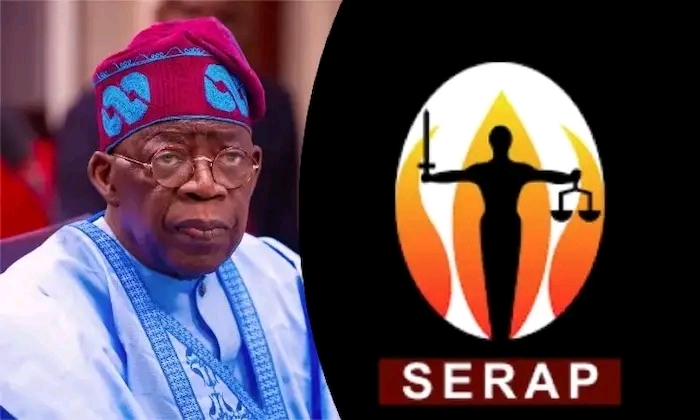
The Socio‑Economic Rights and Accountability Project (SERAP) has called on President Bola Tinubu to immediately direct Communications Minister Bosun Tijani to withdraw the 2019 Lawful Interception of Communications Regulations, describing them as “unconstitutional, unlawful and inconsistent with Nigeria’s international obligations.”

In a letter dated 21 February 2026, SERAP’s deputy director Kolawole Oluwadare warned that the regulations create a sweeping mass surveillance regime that violates Nigerians’ rights to privacy and freedom of expression, granting “overly broad and vague powers to intercept communications on grounds such as ‘national security,’ ‘economic wellbeing,’ and ‘public emergency,’ without adequate judicial safeguards, independent oversight, transparency, or effective remedies.”
SERAP argues that the rules fail the three part test of legality, necessity and proportionality, and that they normalise surveillance as routine state practice.
It points to specific provisions, Regulation 4 (broad discretionary powers for the National Security Adviser and State Security Service), Regulation 8 (warrantless interception in “ordinary course of business” situations), Regulation 12 (emergency, warrantless surveillance on national‑security grounds), and Regulation 23 (expanding authorised agencies to include police, intelligence, EFCC, NDLEA, etc.), as creating legal ambiguity and risk of abuse, especially with elections approaching in 2027.
The group also notes that intercepted data can be stored for up to three years without clear destruction rules, and that individuals are never notified, undermining any chance to challenge unlawful surveillance.
Citing the UN High Commissioner for Human Rights, SERAP says mass‑surveillance programmes based on indiscriminate data collection are “arbitrary per se” and can never meet human‑rights standards.
It warns that, without strict judicial authorisation and independent oversight, such powers could be weaponised against political opponents, journalists, civil‑society actors and election observers, chilling political organising and investigative reporting.
SERAP has given the government seven days to act, threatening legal action if the regulations are not withdrawn and a transparent, inclusive legislative process initiated.